
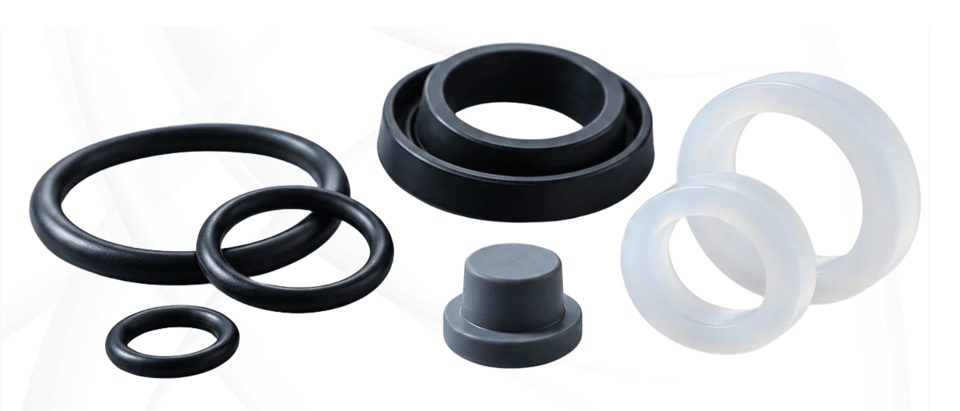
Friction and tack on silicone parts can be reduced through external lubricants, self-lubricating compounds, low-friction coatings, or permanent surface modification. The right approach depends on how the component is assembled, how it moves during use, and which material properties need to remain unchanged.
For manufacturers, the goal is practical: make silicone components easier to handle, install, and operate while extending service life. Reducing surface friction can help achieve these goals while preserving the flexibility and performance that made silicone the right material in the first place.
When do friction and tack become a problem?
Silicone is valued for its flexibility, resilience, and temperature resistance. However, its surface characteristics can create challenges when components need to separate, slide, or fit against other surfaces.
Friction is resistance to movement between contacting surfaces. Static friction affects the force needed to start moving, while dynamic friction affects movement once it begins. Tack describes the tendency of surfaces to stick together.
These characteristics matter in several situations:
-
Assembly: Seals and O-rings can resist insertion, drag, or distort as they are fitted into place.
-
Part handling: Tacky components can stick together, making separation and positioning difficult.
-
Product operation: Moving parts can require more force to start or continue sliding.
-
Component wear: Repeated friction can accelerate surface degradation, shortening service life and increasing replacement frequency.
-
Field installation: Installers may need grease or another lubricant when fitting replacement components.
-
Consumer use: A tacky surface can feel less smooth than intended.
Reducing friction is especially valuable in applications requiring repeated movement, where lower resistance can improve both performance and durability.
What are the options for reducing silicone friction?
Several approaches can improve how silicone parts handle, move, and wear. Each brings different considerations for material selection, processing, and long-term performance.
|
Approach |
How it works |
What to consider |
|
External lubricants |
Oils or greases reduce resistance between contacting surfaces. |
Application steps, lubricant transfer or contamination, cleanliness, and reapplication. |
|
Self-lubricating compounds |
Lubricating ingredients are incorporated into the silicone formulation. |
Lubricant migration or visible blooming, compatibility, and storage requirements. |
|
Low-friction coatings |
A separate layer changes the surface contacting other components. |
Coating thickness, adhesion, flexibility, and durability, including resistance to cracking or void formation during use. |
|
Permanent surface modification |
Treatment changes the existing silicone surface rather than adding a coating. |
Compatibility, friction reduction, and potential improvements in wear life. |
The comparison should include total operating cost, not simply treatment price. Assembly time, lubricant application, maintenance, component replacement, and equipment downtime can influence overall economics.
What can lower friction mean for your application?
Easier assembly and faster production
Lower friction helps silicone seals and other components slide into position with less resistance. This reduces the tendency to drag or distort during fitting and supports smoother, more consistent assembly.
For high-volume manufacturing, reduced tack can help parts separate and feed more consistently through automated equipment, such as vibratory bowl feeders, while lower friction can make insertion easier. Where treatment provides sufficient friction reduction, it can also eliminate a separate lubricant application step.
Longer component life and reduced wear
In applications involving repeated sliding, compression, or movement against another surface, friction contributes to wear and eventual component failure. Reducing that resistance can decrease surface damage and extend useful operating life.
In suitable applications, ModyGlide™ can provide three times the wear life or more compared with low-friction coating technologies. Actual improvements depend on the material, operating conditions, contact pressure, and movement cycles.
Longer component life can help manufacturers reduce replacement frequency, maintenance costs, and equipment downtime.
Simpler installation and replacement
Where friction reduction eliminates the need for added lubricants, installers and technicians can fit components without a separate greasing step. This simplifies field replacement, reduces required materials, and supports more consistent installation.
Smoother movement during use
For components such as plungers and moving seals, lower starting and sliding resistance can make movement easier and more consistent. Reduced friction can also decrease the force required for operation while limiting friction-related wear over time.
A smoother, silky feel
For consumer applications, reducing surface tack gives silicone a smoother, silkier feel while retaining its underlying softness and flexibility. This improves the user experience without changing the bulk material.
How does ModyGlide™ reduce friction and extend silicone wear life?
ModyGlide™, part of the ModyFy™ family of surface technologies from Inhance Technologies, permanently modifies the surface of formed silicone and other elastomeric parts.
Through controlled fluorination, the treatment changes the material at the molecular level at its surface, reducing the coefficient of friction and surface tack. No separate coating layer is added, and part dimensions, flexibility, and bulk mechanical properties remain unchanged.
By reducing resistance between contacting surfaces, ModyGlide™ can improve assembly efficiency, movement, and durability. These benefits can be particularly valuable in seals, O-rings, medical components, industrial equipment, and other applications where repeated movement and long-term reliability matter.
A silicone before-and-after example
Our testing of liquid silicone rubber showed an approximately 93% reduction in dynamic coefficient of friction after ModyGlide™ treatment, from 10.1 to 0.70, measured using ASTM D1894.
This reduction demonstrates how surface modification can change the friction performance of silicone while preserving its bulk mechanical properties. Friction reduction and wear-life improvements are separate performance measures and should be validated on finished components under representative operating conditions.
For applications considering a coating, our Comparing ModyGlide™ with Parylene datasheet explains the different approaches and where each fits.
Evaluate the result on your own parts
A useful evaluation starts with the problem you want to solve: difficult insertion, sticking during handling, excessive sliding resistance, premature wear, or unwanted surface tack.
Compare treated and untreated parts using measures that matter to your application, including installation force, coefficient of friction, assembly time, wear cycles, and continued sealing performance. If you are considering an alternative to a coating or lubricant, include parts using that approach in the comparison.
For components subject to repeated movement, testing wear life can reveal benefits beyond initial friction reduction, including potential savings from fewer replacements and reduced downtime.
Want to reduce friction and extend the life of your silicone components? Contact Inhance Technologies to discuss your application and arrange a sample evaluation.
Frequently Asked Questions
Can silicone friction be reduced without adding grease?
Yes. Self-lubricating compounds, coatings, and permanent surface modification offer alternatives to externally applied grease. ModyGlide™ reduces friction without requiring an added lubricant or coating.
Can reducing friction extend silicone component life?
Yes. Lower friction can reduce surface wear during repeated movement and help extend component life. The improvement depends on the material and operating conditions, so wear performance should be evaluated in the intended application.
Does ModyGlide™ change silicone's dimensions or flexibility?
ModyGlide™ modifies the surface without adding a separate coating layer. Part dimensions, flexibility, and bulk mechanical properties remain unchanged.
Can existing silicone parts be treated?
Yes. ModyGlide™ is applied after the part is formed. Silicone grade, part design, and performance requirements can be reviewed to determine suitability.
Does the low-friction effect survive cleaning?
ModyGlide™ is a permanent surface modification designed to retain low-friction characteristics through repeated cleaning and sterilization. Performance should be validated against the specific methods and cycles required.
Will every silicone part achieve the same friction reduction or wear-life improvement?
No. Results depend on the silicone formulation, contacting surface, loading, movement, and operating environment. Testing actual components provides the best basis for determining improvements in friction, durability, and service life.